Discover the transformation brought to production lines by automation, artificial intelligence, and lights-out factory systems. The future is now powered by data!
Blog
Knowledge
Diary of a Production Line: Routines Transformed by Automation
In the modern industrial age, production lines no longer awaken to the morning shift bell, but to sensor data. Human-initiated processes are giving way to data-triggered automation systems. As the role of operators evolves, the production line now establishes its own routine through algorithms. This transformation is not merely a mechanical advancement; it is a revolutionary innovation that redefines key performance metrics such as efficiency, quality, energy savings, and sustainability.
By reducing human-dependent processes in production, automation technologies both minimize errors and guarantee production continuity. Consequently, unmanned factories, lights-out production lines, and fully automated facilities have become the new norms of the industry today. The future of production no longer relies on light, but on data.
In this article, we will examine this silent yet profound transformation step by step through the eyes of a production line. We invite you to the heart of digital manufacturing with real-world scenarios and actionable strategies on unmanned production models, the operations of lights-out factories, and production routines transformed by automation.
Production Diary: From Traditional to Digital
So, how did routines function on production lines before this transformation?
The morning of a production day in the past…
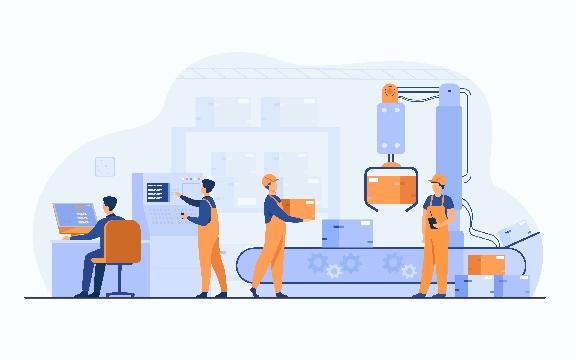
At 07:00, workers would pass through the turnstiles, sign the shift log, and everyone would take their positions on the production line. Operators would activate the machines one by one, and the process would slowly come to life. However, this entire flow was dependent on human labor and attention.
Fatigue, timing errors, or a minor oversight… These were ordinary daily problems that put production quality at risk. Because production was fueled by human reflex, not data.
Today, however, the landscape is very different.
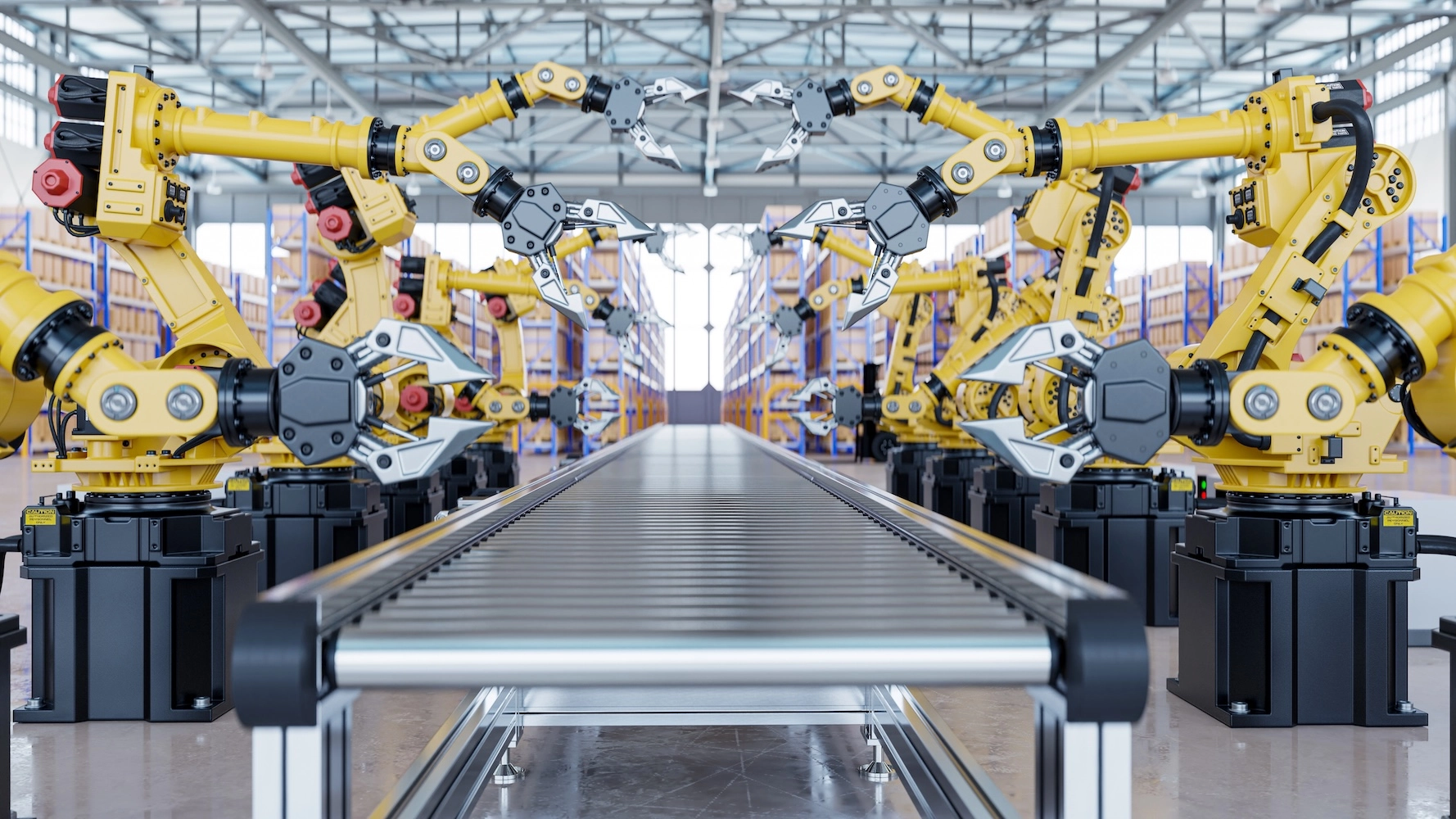
Automation systems have largely taken control of the production line. Sensors start the day; environmental data is collected, and the system determines the production sequence itself.
PLCs activate production stations sequentially; ERP and MES systems transmit work orders instantly.
This entire process operates without human intervention. The production line thinks like an organism with data and makes decisions through analysis.
What has this transformation changed?
Work orders are now automatically generated on digital platforms.
Quality control becomes data-driven, traceable, and continuous.
Operators assume a role of digital supervision rather than physical labor.
Human-induced disruptions are minimized.
Today, unmanned production is not a dream. Fully automated lines in many sectors such as automotive, electronics, food, and pharmaceuticals are now our daily reality.
This change is not just a technological advancement. It is also the new name for efficiency, sustainability, and flexibility.
Now, the tempo of production is determined not by people, but by the flow of data and the intelligence of automation.
The New Generation Routine
The daily flow of a production line now looks like this:
06:00 | The SCADA system synchronizes with MES data.
06:05 | PLCs sequentially activate production equipment.
06:10 | Production begins; sensors track every step.
06:30 | AGVs start transporting materials.
07:00 | Quality control is performed via AI-supported visual analysis.
Throughout the day | Failure risks are predicted in advance, intervention becomes automated.
This automated routine not only saves time but also ensures zero defects and predictability at every step of production. Thus, a data-driven production discipline is established without the need for human intervention.
Dark Factories: Production 'Lights Out'
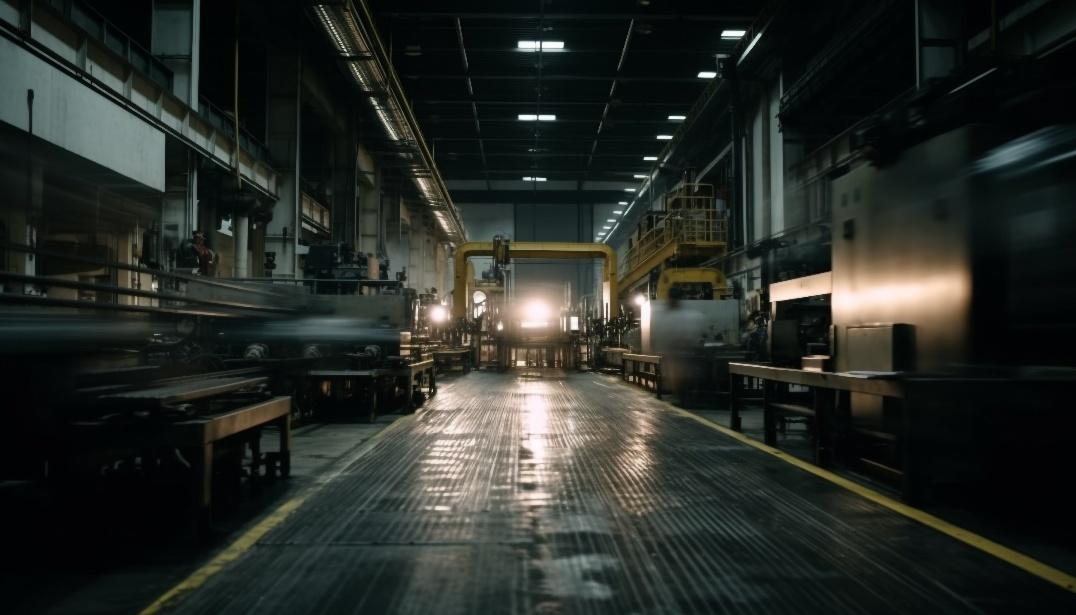
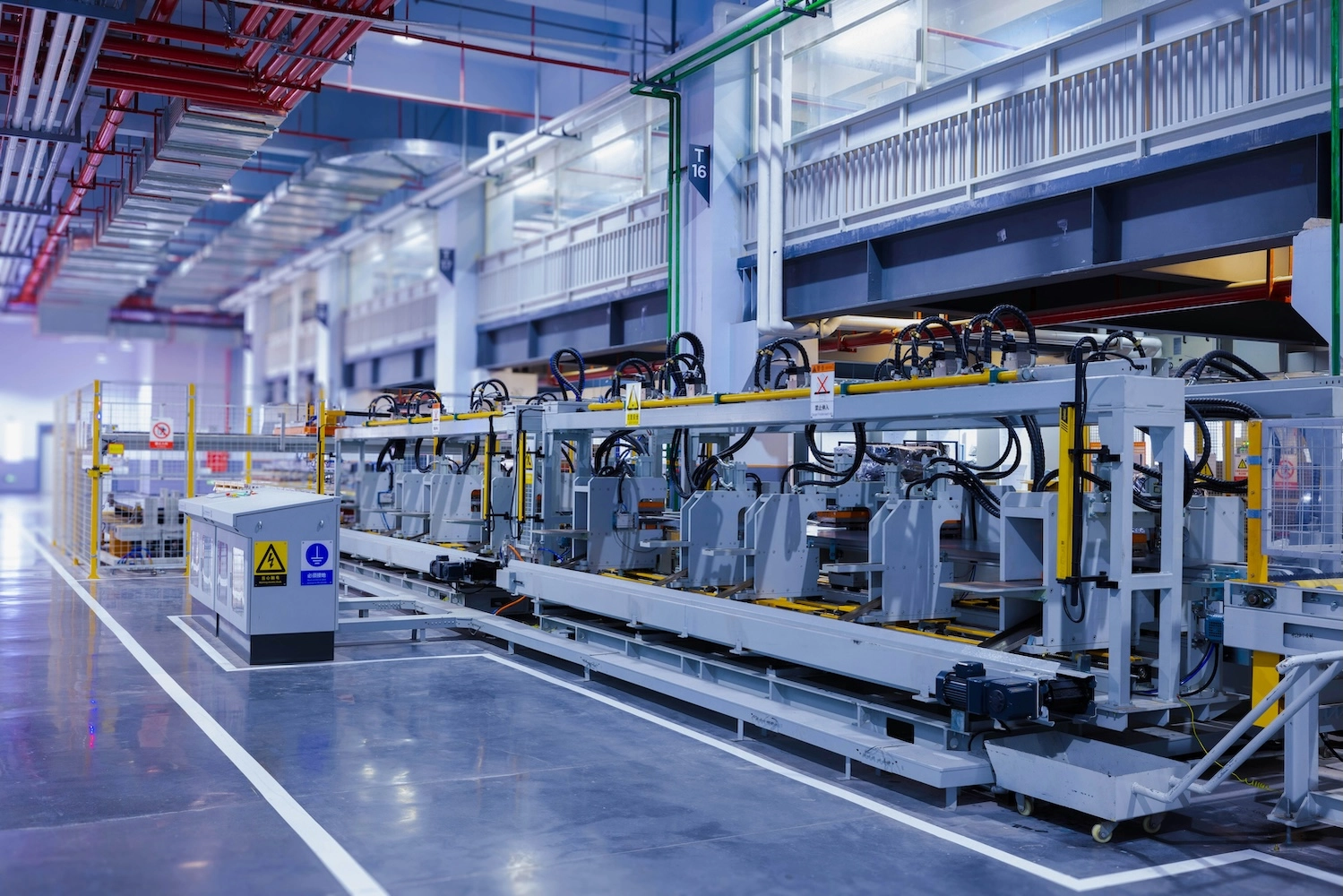
The dark factory gets its name from not needing light during production; however, beyond this definition, it represents the most advanced phase of the industrial revolution in the digital age. In such factories, human intervention is minimized or completely eliminated. Production processes continue uninterrupted 24/7 through automation systems, artificial intelligence algorithms, and machine-to-machine (M2M) communication.
Since dark production lines do not require physical human presence, there is no need for lighting systems. Instead, machines execute their tasks independently, triggered by sensor data. All steps, including raw material intake, assembly, quality control, packaging, and logistical flows, are operated according to predetermined digital scenarios.
The advantages offered by this structure are not limited to operational continuity. At the same time:
Labor-induced error rates approach zero.
Occupational safety risks are minimized.
Energy efficiency is ensured.
Production capacity is optimized without depending on human rhythm.
Processes become standard, traceable, and auditable.
Patrion's advanced automation solutions allow businesses to confidently step into this transformation journey. With real-time data tracking, predictive maintenance algorithms, flexible production scenarios, and remote management systems, traditional production facilities can transform into unmanned factory models in a short time.
Today, the dark factory concept has become applicable not only to large tech giants but also to small and medium-sized enterprises (SMEs) in many sectors. The lights may be off, but the production line operates at full power. Because the driving force of production is no longer humans, but the intelligence of automation and seamless digital integration.
Is an Unmanned Production Line Possible? Not the Future, but Today’s Reality
The unmanned production line has transformed into a tangible solution accessible not only to large technology companies but to businesses of all scales adopting digitalization strategies. Thanks to developments in automation technologies, AI-supported production planning, and continuous data flow, dependency on human power in production processes has significantly decreased.
Today, production lines can, without the need for human intervention:
Initiate the production process
Optimize material flow
Perform quality control
Continuously improve themselves with real-time data
Detect potential failures or performance drops in advance
This transformation offers not only operational ease but also a competitive advantage. Because unmanned production systems:
Minimize work accidents: As the need for physical labor decreases, employees are withdrawn from dangerous production areas.
Raise production standards: Every product is produced at the same speed, with the same accuracy, and the same quality standard.
Reduce the rate of defective products: Instead of human error, constantly supervised algorithms that work with feedback are in charge.
Ensure energy efficiency: The system works only when needed, eliminating unnecessary energy consumption.
Make maintenance processes predictable: Instead of traditional post-failure intervention, problems are solved before they occur with predictive maintenance.
With the integrated automation solutions offered by Patrion, the transition to this process becomes fast, secure, and sustainable. Switching to an unmanned production line is now possible not with high investment costs, but with the right digital strategy.
The production line of the future now runs on data, not light. And that future has already arrived!
Artificial Intelligence and Manufacturing: Adding Strategic Intelligence to Automation
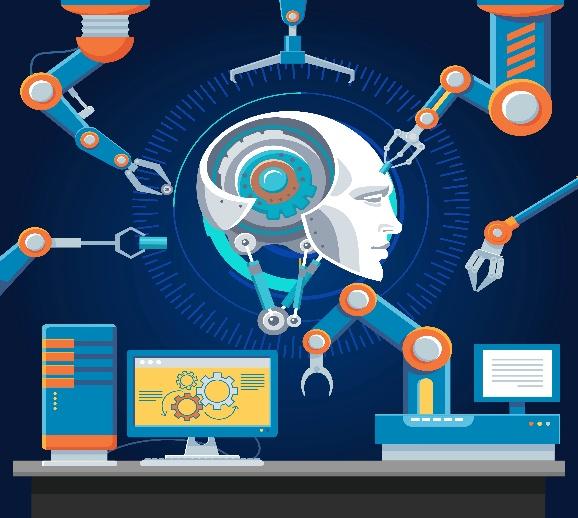
Production processes are becoming not just automatic, but also systems that can learn. While traditional automation systems execute production processes within a specific program, AI algorithms integrated into these systems today do not just execute production; they also optimize, learn, and make forward-looking predictions.
This provides not only speed and accuracy to production lines but also flexibility, foresight, and decision-support capacity.
Production processes are now not only automated but also intelligent. Especially in high-volume and highly variable production environments, AI-supported automation systems enable strategic decision-making by processing data analytics instantly.
Prominent AI applications in this context are as follows:
1. Predictive Maintenance
To eliminate the damage caused by machine failures to production continuity, AI algorithms monitor machine health instantly via sensor data. Potential failure signs are detected from parameters such as vibration, temperature, and current, and the system issues an intervention call.
Thus:
Unplanned downtimes are prevented.
Maintenance costs decrease.
Production line continuity increases.
2. Predictive Production Planning
Traditional production plans rely on fixed data. However, AI can predict demand fluctuations, supply chain risks, and seasonal changes by analyzing historical production data. Furthermore, the production line can automatically reschedule based on current data. This provides a serious advantage, especially in high-tempo and highly variable industries.
3. Anomaly Detection and Warning Systems
Unusual behaviors that may occur during production—such as speed drops, material inconsistency, energy consumption spikes—are automatically noticed by AI-supported algorithms. Details that the human eye might miss are detected instantly via image processing or data modeling. Thus, the system gives a warning before failures occur, increasing production safety.
4. Energy Management Automations
AI optimizes not only production but also energy consumption. Energy usage is minimized by analyzing the facility's most efficient working hours, peak points, and idle capacity periods. Especially in energy-intensive sectors, this system plays a critical role in reducing the carbon footprint and lowering costs.
Real-Time Inventory and Logistics Management
When the production line is digitized through automation, it is not only the movement of machines that is optimized by smart systems, but also material management, inventory tracking, and logistics flow. Issues such as excess inventory, material shortages, or in-line bottlenecks encountered in traditional production processes are eliminated with automation-supported logistics infrastructures.
In today's integrated production systems:
Inventory is monitored instantly:
Thanks to sensors and RFID technologies, the location, quantity, and status of every material can be tracked in real-time. This eliminates manual counting errors and supply delays.
Logistics planning becomes automated:
The sequence and quantity in which input materials must reach the production line are automatically determined by AI-supported systems. The system performs dynamic planning based on production speed.
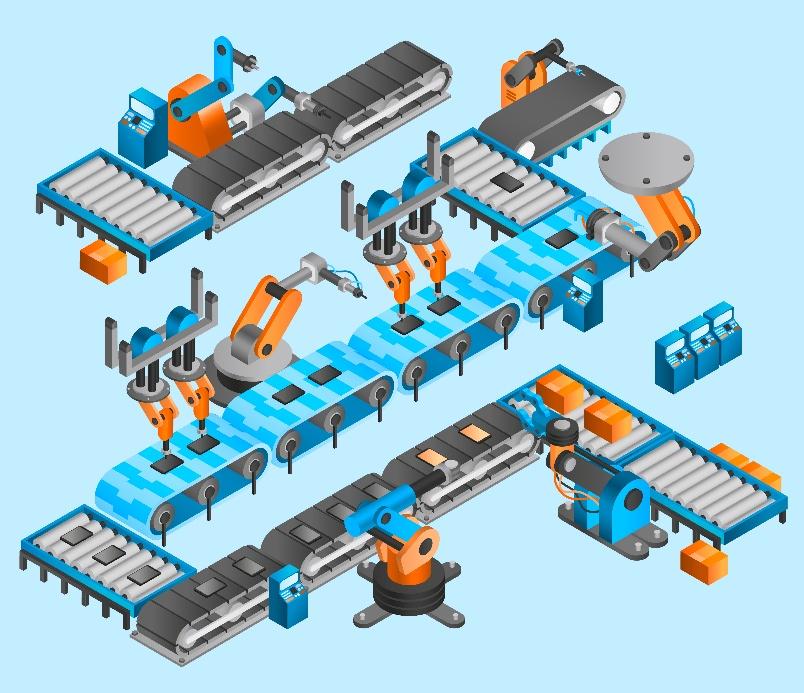
Uninterrupted material flow is ensured with AGVs and robotic arms:
Autonomous Guided Vehicles (AGVs) carry out material handling tasks without the need for human intervention. Robotic arms ensure continuity by performing synchronized material transfers from line to line.
Thanks to this digital structure:
Unnecessary inventory burdens are eliminated.
Production stoppages caused by material shortages are prevented.
Waste is minimized, and efficiency increases.
The supply chain becomes more transparent, faster, and adaptable.
Moreover, these systems transform not only physical operations but also data-based decision-making processes. Every movement on the production line becomes analyzable. Thus, businesses can plan not only for today but also for tomorrow.
Daily Routines Have Changed, The Future Has Begun
Routines shaped by human hands on yesterday's production lines have given way to smart processes managed by algorithms today. Production is now not only fast; it is also uninterrupted, error-free, traceable, and predictable. Thanks to unmanned production lines, dark factories, and AI-supported automation systems, production has moved far beyond physical limits.
This digital transformation is not just a technological transition; it is also a new way of management and thinking. Data-driven decision-making, continuous improvement, efficient use of resources, and agile production concepts are now among the fundamental conditions for competing in the industry.
The lights may be off in dark factories. But machines continue to speak with data and produce. Production is shaped not by the time of day, but by the timing of need. Errors are prevented before they appear, maintenance is started before a breakdown occurs, and resources are optimized without being wasted.
If you want to carry your production line to the future, eliminate manual errors, and make your efficiency continuous, contact Patrion experts immediately. Let's embark on the journey of unmanned, smart, and sustainable production together.
The future has already begun for those who are ready.


.svg)




.svg)
.svg)


