


.svg)


Diary of a Production Line: Routines Transformed by Automation
Discover the transformation brought to production lines by automation, artificial intelligence, and lights-out factory systems. The future is now powered by data!
Subject
Automation
HMI systems are the key to touch panel technology, real-time data monitoring, and digital transformation in industrial automation. What is HMI? How does it work? In which sectors is it used? All the details are in this comprehensive guide.
Blog
Knowledge
Industrial automation systems are no longer limited to merely automating machines; they are transforming into advanced digital platforms that make human-machine interaction smart, fast, and efficient.
At the center of this evolution lies HMI (Human-Machine Interface). In modern production facilities, HMI undertakes critical functions such as:
Discover the role of HMI systems in industrial automation, ranging from touch panels to AI-supported production!
So, what is HMI? In which sectors is it used, and why does it play such a vital role in industrial automation systems?
HMI solutions work integrated with SCADA (Supervisory Control and Data Acquisition) infrastructures to enable centralized monitoring and control of production lines. By utilizing IIoT (Industrial Internet of Things) devices, touch panels, remote access capabilities, and advanced data visualization features, HMI makes production lines safer, more flexible, and sustainable.
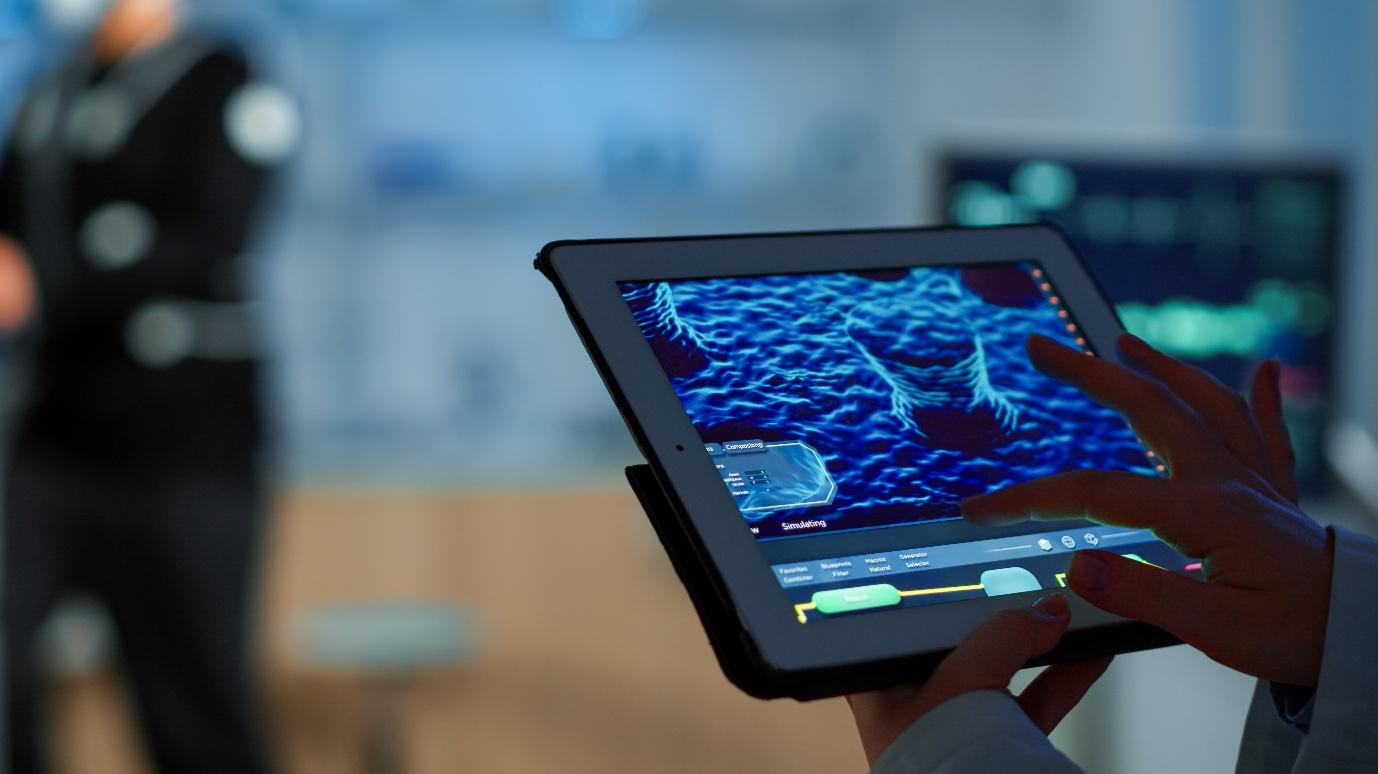
HMI (Human-Machine Interface) is an interface system that provides communication and control between humans and machines. In its simplest definition, any touch screen, button, software, or hardware component where an operator interacts with a machine can be called an HMI. Today, HMI systems typically operate via touch panel screens and are equipped with user-friendly graphical interfaces.
Thanks to an HMI system, operators can:
These systems do not merely transfer information; they can also be viewed as digital supervisors that contribute to the decision-making process.
Industrial automation is the general term for systems that enable machines and production processes to operate without human intervention. For these systems to work effectively, smart production infrastructures and real-time data monitoring solutions are of great importance.
This is exactly where HMI systems step in, playing a critical role in terms of production analytics through both control and observation functions. For operators to analyze processes correctly and intervene quickly when necessary, an intuitive and user-friendly HMI screen compatible with Industry 4.0 interfaces is essential.
Example: In a packaging line, operations such as adjusting belt speed, monitoring sensor data, or instantly detecting system errors can be performed via HMI screens. This ensures that decisions regarding the production line are made faster, more efficiently, and more accurately—an important step in achieving smart production goals.
Furthermore, advanced HMI software integrated with automation systems provides operators with not just basic controls but also critical data such as production analytics, error analyses, preventive maintenance alerts, and energy consumption. This real-time data tracking allows managers to make more strategic decisions while minimizing production losses, reducing costs, and increasing efficiency.
HMI systems offer a wide range of uses in almost every area of industrial automation. Are you looking for a custom HMI solution for your production line? These systems, shaped by needs that vary from sector to sector, are used to increase efficiency and control in many industries, from production to energy, and from food to automotive:
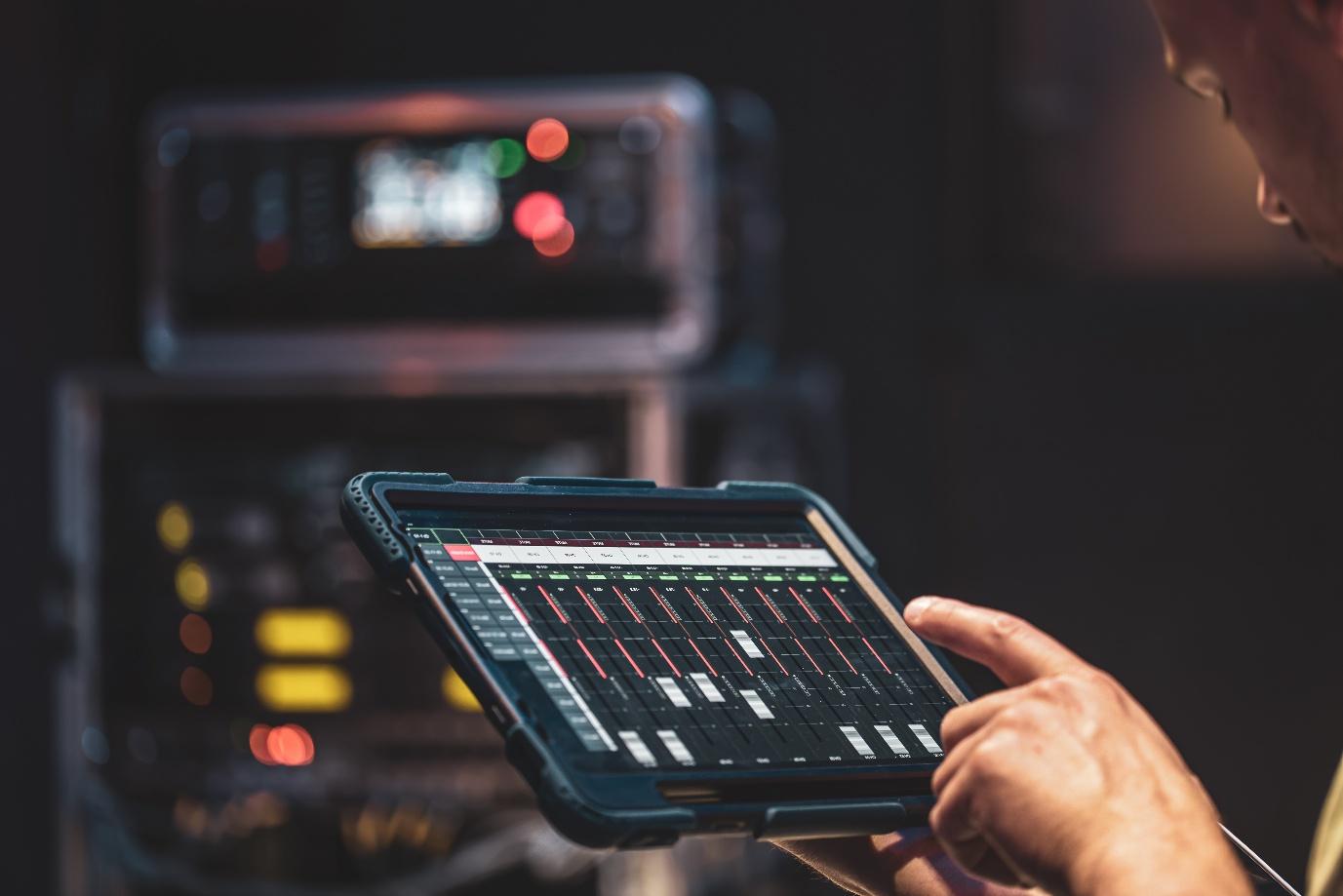
While HMI systems in the past operated mostly through panels consisting of physical buttons, LED screens offering limited information, or analog indicators, today this structure has been completely replaced by digital, smart, and user-friendly systems.
With the development of touch panel technology, HMI systems have undergone a major evolution not just visually, but also functionally. Operators can now monitor and control processes in much greater detail via wide-screen, high-resolution, color graphic interfaces.
Modern touch HMI panels are equipped with interfaces that allow users to interact intuitively. Thanks to advanced features such as:
System usage has become easier, the risk of making errors has decreased, and operator efficiency has increased. Additionally, offering multi-language support, these panels contribute to creating a common control language in international facilities.
Serious developments are also seen in terms of hardware. Touch panels are manufactured in accordance with industrial protection classes such as IP65 and IP67, showing resistance to:
This makes them usable in many challenging areas, from food production to petrochemical plants, and from automotive to outdoor applications.
Furthermore, these systems function not only as a display and control tool but also as a data collection and analysis center. Many HMI systems can now work integrated with SCADA platforms, transferring data to the cloud environment and offering central analysis opportunities. In this way, real-time data can be obtained from production, system performance can be measured, and future-oriented decisions can be made.
In conclusion, the rise of touch panel technology has made HMI systems not only stylish and compact but also strategic production tools. With their user-friendly interfaces, strong hardware infrastructure, and data-focused structure, they have become an indispensable component of modern industrial automation.
There are numerous advantages to using HMI in industrial automation systems:
HMI systems ensure the instant monitoring of all processes occurring on production lines. Operators can track parameters such as machine status, production data, temperature, and pressure in real-time. In this way, potential problems are noticed early, and precautions can be taken without experiencing disruptions in production. At the same time, managers can also analyze general performance data and make strategic decisions.

Rapid intervention in breakdowns in industrial automation is of vital importance for production continuity. HMI systems show where the problem is occurring by presenting error messages to the user in a clear and understandable way. In this way, operators can take action without losing time, and production downtimes are minimized. This also directly increases general efficiency.
HMI interfaces allow for the optimization of every stage of production processes. Operators can easily monitor system parameters and adjust them when necessary. Rapid detection and correction of errors reduce the waste rate and maximize machine uptime. As a result, production lines become able to work more efficiently and in a controlled manner.
Modern HMI systems significantly shorten the adaptation period of new operators to the system thanks to their user-friendly interfaces. Thanks to visual indicators and guidance on the touch panel, users can perform operations easily. While this lowers training costs, it also significantly reduces human error.
Web-based or cloud-supported HMI software makes remote access to the system possible for operators and managers. Thanks to this feature, maintenance teams can check the system status, analyze data, and intervene if necessary even if they are not at the production facility. This capability provides a great advantage, especially in multi-location production facilities.
The detailed analysis capabilities offered by HMI systems help to optimize energy consumption. Consumption trends, inefficiently operating equipment, or processes using excessive energy can be easily detected. Improvements made in light of this information both contribute to environmental sustainability and lower operating costs.

Digital transformation is one of the biggest technological movements today that enables production facilities to become more efficient, flexible, and sustainable. While this transformation process paves the way for new generation solutions, especially in the field of industrial automation, HMI systems are also positioned at the center of this evolution. They are no longer just machine interfaces, but also data processing and decision support platforms.
Modern HMI solutions provide full integration with Industrial Internet of Things (IIoT) devices, making digital monitoring of all assets on the production floor possible. These systems do not only show machine status; they also analyze operational data to detect anomalies, present performance efficiency measurements, and allow for process improvement. This supports many smart scenarios, from the creation of pre-failure warning systems to the automation of maintenance plans.
Equipped with artificial intelligence and machine learning, HMI systems can learn from historical data to predict faulty behaviors and offer real-time action suggestions. In this way, the decision-making process accelerates, and losses that may occur on the production line are minimized. Even some advanced systems can intervene automatically under certain conditions.
HMI solutions working integrated with cloud technologies ensure the collection of data on a central platform and the management of multi-location facilities via a single panel. This approach both increases security and offers managers remote access and analysis opportunities. At the same time, when combined with big data infrastructures, digital twins of production processes can be created, and simulation and optimization scenarios can be developed.
In short, new generation HMI systems, which are a part of digital transformation, have become smart solutions that not only present data but direct strategic decisions. With this transformation, businesses can develop more flexible production models, reduce energy and maintenance costs, and provide a competitive advantage.
HMI (Human-Machine Interface) systems offer numerous advantages to businesses as an integral part of modern industrial automation. Thanks to advanced touch panel technology, user-friendly interfaces, real-time data monitoring, remote access, AI integration, and cloud-supported infrastructures, HMI systems are not just control tools but also decision support and digital transformation engines.
The contributions offered by HMI solutions in the development of industrial automation systems can be summarized as follows:
You can make your automation processes smarter, more controlled, and more competitive with HMI systems. If you want to increase production efficiency, ensure system security, and accelerate your digital transformation journey, industrial HMI technologies are no longer an option, but a necessity.
Remember: The factories of the future are shaped by human-machine interfaces established correctly today. If you aim for sustainability, flexibility, and high performance in your production processes, now is the perfect time to include industrial HMI systems in your investment plans.
Author
Aslı Şahin
Sales Engineer
Yazar
Blog
Knowledge Base


.svg)
.svg)


