


.svg)


Diary of a Production Line: Routines Transformed by Automation
Discover the transformation brought to production lines by automation, artificial intelligence, and lights-out factory systems. The future is now powered by data!
Furkan Canatan
Subject
Patrion University
What are the differences between LV and MV panels? We detail the comparison between low and medium voltage panels based on voltage levels, application areas, safety standards, and design criteria.
Blog
Knowledge
Concepts such as low voltage panels, medium voltage panels, the difference between LV and MV, electrical panel design, IEC standards, and energy distribution systems form the foundation of safe energy management in industrial facilities. An electrical panel used in a factory, a data center, or a power plant is not just equipment that distributes energy, but the "heart" of the system. However, there are significant differences between panel types used according to the voltage level.
Understanding these differences is of critical importance not only from an engineering perspective but also in terms of operational safety, sustainability, and maintenance costs. So, what exactly are LV and MV panels, how do they work, and under what conditions should they be preferred?
Low Voltage (LV) panels are electrical distribution units used in systems below 1000 volts. These panels typically operate in the 400–690 V range and have a wide range of applications, from industrial facilities to commercial buildings.
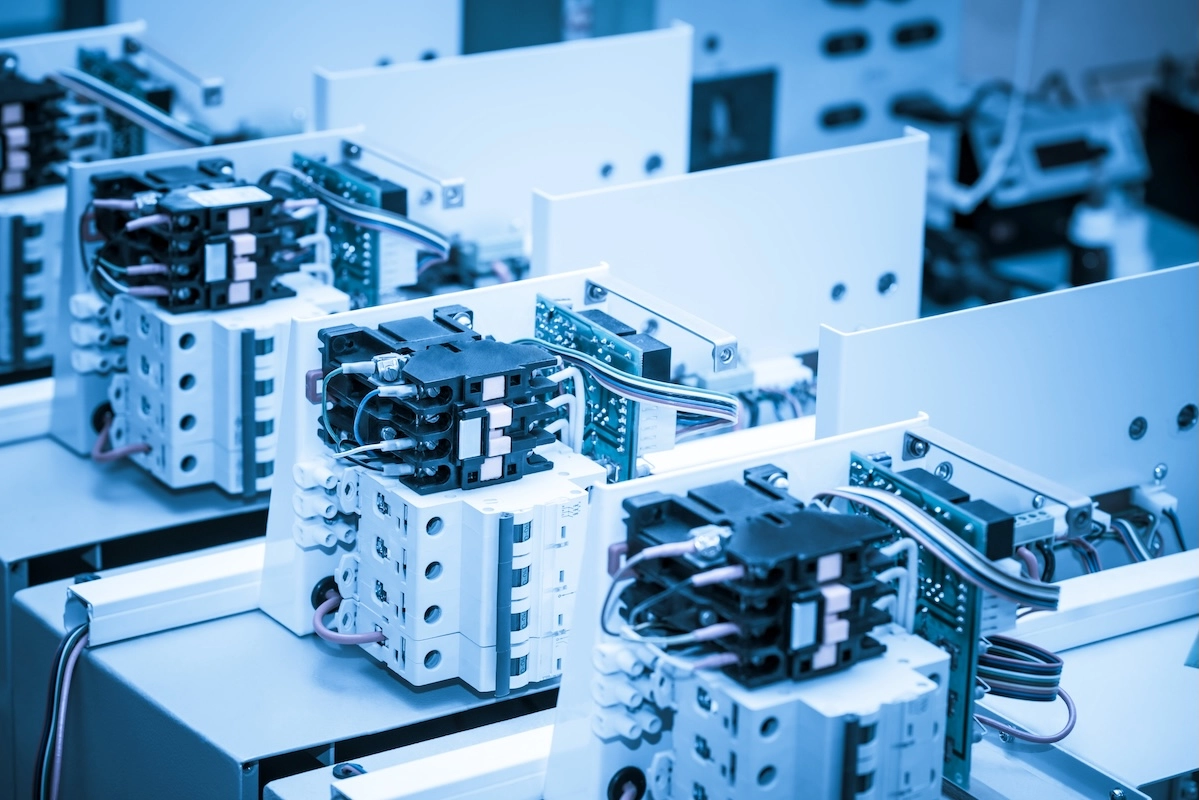
LV panels are equipped with fuses, contactors, measuring devices, energy analyzers, residual current devices (RCDs), and automation components. These panels both regulate energy distribution and protect human safety. They work in integration with motor control centers (MCC) and compensation systems, especially in industrial production lines.
Medium Voltage (MV) panels are generally used in systems between 1 kV and 36 kV. These panels are essential components of energy transmission and distribution networks. MV panels play a critical role in transformer stations, power plants, mines, and large manufacturing facilities.
These panels contain circuit breakers, disconnectors, measurement transformers, and protection relays. Since they operate with high current values, their insulation, arc protection, and grounding systems are highly advanced. Consequently, MV panels are preferred in areas requiring high power security and system continuity.
The difference between LV and MV panels is not limited to voltage level. There are also distinct differences in terms of structural, functional, and safety aspects:
These differences necessitate selection based on the facility's energy requirement, safety classification, and installation environment.
Compliance with international standards is highly important in the design of LV and MV panels. Specifically, the IEC 61439 (LV panels) and IEC 62271 (MV panels) standards define the safety, durability, and testing conditions for panel manufacturing. Panels compliant with these norms guarantee both user safety and facility continuity. In Turkey, these standards are aligned with TSE EN norms.
These standards define:
Energy distribution is one of the most critical functions of industrial facilities, infrastructure systems, and commercial buildings. Low Voltage (LV) and Medium Voltage (MV) panels, which are central to this process, ensure the transfer of energy is safe, balanced, and efficient. Electrical energy passes through many stages from the point of production to the point of consumption, and it needs to be controlled at different voltage levels at each stage. At this point, LV and MV panels undertake the task of "transforming" and "managing" energy.

MV panels are generally used in power plants or transformer stations and reduce high-voltage energy to lower levels. When this energy is brought to the level required by the facility, LV panels become active and distribute the energy to the production line, machines, or building systems. Thus, energy flow occurs in a controlled and safe manner. LV panels also protect equipment against short circuits, overcurrent, and voltage imbalances due to their protective elements.
In modern energy infrastructures, the integration of LV and MV panels has become increasingly important. Smart panel systems can digitally monitor both the high-voltage side and the low-voltage side, detecting faults in advance. This increases energy continuity while reducing maintenance costs. Consequently, coordination between LV and MV panels is essential for uninterrupted power management and high efficiency.
Simply put:
This dual structure prevents energy outages, balances system loads, and preserves power quality. Integrated solutions where LV and MV systems work together are preferred, especially in large industrial facilities.
The reliability of a panel system begins with correct design and installation. International standards such as IEC 61439 (for LV panels) and IEC 62271 (for MV panels) determine all the technical requirements that must be considered in panel design. According to these standards, the panel's short-circuit withstand capability, thermal performance, insulation level, and protection class must be meticulously planned. Especially in MV panels, factors like arc resistance and air or gas insulation type (GIS/AIS) play a critical role in system safety.
During the installation phase, the grounding systems around the panel, cable connections, and heat management are the most important parameters. The panel's placement must not obstruct airflow; cable entry/exit directions should be arranged to facilitate operator access. Furthermore, the appropriate IP protection class must be selected by taking ambient conditions (dust, moisture, temperature) into account. For outdoor installations, a stainless steel body and IP65 level protection should be preferred.
Another important aspect is modular design and expandability. A well-designed panel system allows for the easy integration of additional circuits or new equipment in the future. This ensures the energy infrastructure flexibly adapts as the facility grows. Proper design and installation directly affect not only operational safety but also energy continuity, ease of maintenance, and system lifespan.
These factors extend panel lifespan and ensure energy continuity.
Today's panels are no longer just passive hardware distributing energy; they have become smart systems that collect data, analyze, and self-manage. Thanks to IoT-based sensors, digital analyzers, current monitoring modules, and communication cards, LV and MV panels have become remotely monitorable. This allows energy consumption, load distribution, and system health to be tracked instantly, preventing faults before they occur.
In LV panels, energy analyzers, compensation controllers, and communicable circuit breakers are frequently used. These technologies monitor energy quality and control voltage fluctuations and reactive power consumption. In MV panels, protection relays, arc detection systems, insulation monitoring devices, and SCADA integration stand out. These components ensure the system operates safely and stably despite its high-voltage nature.
AI-supported monitoring systems and Digital Twin applications have also begun to be used in new- generation panel technologies. These solutions optimize energy flow by modeling panel performance in a virtual environment. Furthermore, thanks to remote maintenance and predictive analysis features, businesses minimize fault risks. Consequently, modern LV and MV panels are not just energy distributors; they have become central components of a data-managed, sustainable energy infrastructure.
Panel selection must be determined according to the facility's voltage need, power distribution, installation environment, and budget.
The following steps must be followed when making a selection:
Incorrect panel selection can lead to high heating, energy loss, short circuits, and safety risks. Therefore, determining the panel type with professional engineering support is highly important.
Maintenance of LV panels is generally short and easy. Periodic inspections include checking connection tightness, thermal imaging, and insulation tests. In MV panels, due to high voltage, maintenance operations are carried out only by competent personnel and within the framework of strict safety protocols.

Arc testing, gas insulation control, and relay calibration are also applied in MV panels. This difference stems from the fact that MV systems are both more complex and more durable in structure.
Industry 4.0 and digital transformation are also transforming LV and MV panels. Smart panels provide fault prediction, remote maintenance, and energy optimization by analyzing data collected from sensors.
In the near future:
These developments will ensure energy infrastructures become safer, more efficient, and environmentally friendlier.
Low Voltage (LV) and Medium Voltage (MV) panels are two complementary, important links in the energy management chain. LV panels manage in-facility distribution, while MV panels manage the grid connection. Understanding the differences between them is critically important for selecting the correct system. Compliant, safe, and smart panels conforming to IEC and TSE standards ensure business energy continuity, reduce costs, and contribute to sustainability goals.
What is a low voltage (LV) board?

At what voltages is the medium voltage (MV) board used?
What is the most fundamental difference between LV and MV boards?
How do IEC standards regulate these boards?
Why are MV boards more expensive?
Which enterprises use LV and which MV switchboards?
By whom should the maintenance of MV boards be carried out?
What are smart board technologies?
What criteria should be considered when choosing a board?
How will LV and MV boards evolve in the future?
Author
Furkan Canatan
Marketing Manager
Yazar
Blog
Knowledge Base


.svg)
.svg)


