


.svg)


Diary of a Production Line: Routines Transformed by Automation
Discover the transformation brought to production lines by automation, artificial intelligence, and lights-out factory systems. The future is now powered by data!
Blog
Knowledge
Modern manufacturing facilities are no longer just spaces comprised of machines; they are becoming digital organisms fed by data and equipped with flexible, intelligent systems. This transformation is not merely a technological renewal; it is a strategic step that increases the competitiveness of businesses.
Industrial automation has become the fundamental building block of modern industry; meeting critical needs such as continuous control in production, rapid intervention, energy efficiency, and quality management with manual systems has become almost impossible. It is exactly at this point that integrated solutions like SCADA, PLC, and MES systems step in to enable the digitalization of production.
It is no longer enough to simply run machines; it is necessary to monitor, interpret, and direct the data produced by those machines in real-time. Automation systems not only provide speed; they also:
This new era, where SCADA, PLC, and MES infrastructures work together, is radically transforming the manufacturing sector and redefining the future of industrial automation.
Industrial automation is a technological approach that ensures production and operational processes are carried out by automatic systems with no or minimum human intervention. These systems bring together many components in an integrated structure, such as:
The goal is to make production lines more efficient, safe, flexible, and sustainable.
Industrial automation does not just control the machines on the production line; it also digitalizes processes such as data analysis, predictive maintenance, energy management, inventory tracking, and quality control. Thus, decision-making processes accelerate, resource usage is optimized, and production continuity is ensured.
At the heart of this transformation lie integrated structures supported by SCADA, PLC, and MES systems. Let’s examine the building blocks of this transformation together.
SCADA (Supervisory Control and Data Acquisition) systems are systems that collect, visualize, and manage data received from production lines or facilities in real-time. Operators can monitor the entire process via SCADA, make instant interventions, and optimize production strategies by analyzing historical data.
SCADA systems have a wide range of uses, from power plants to production lines, and from water treatment facilities to the food industry. These systems do not just monitor processes; they produce deep insights that enable making the right decisions.
Partori steps in exactly at this point, simplifying SCADA data, analyzing it, and facilitating production decisions with manager-specific reports. If you want not only to see your production data but also to make sense of it and turn it into action, you must definitely take a look at the smart monitoring solutions offered by Partori.
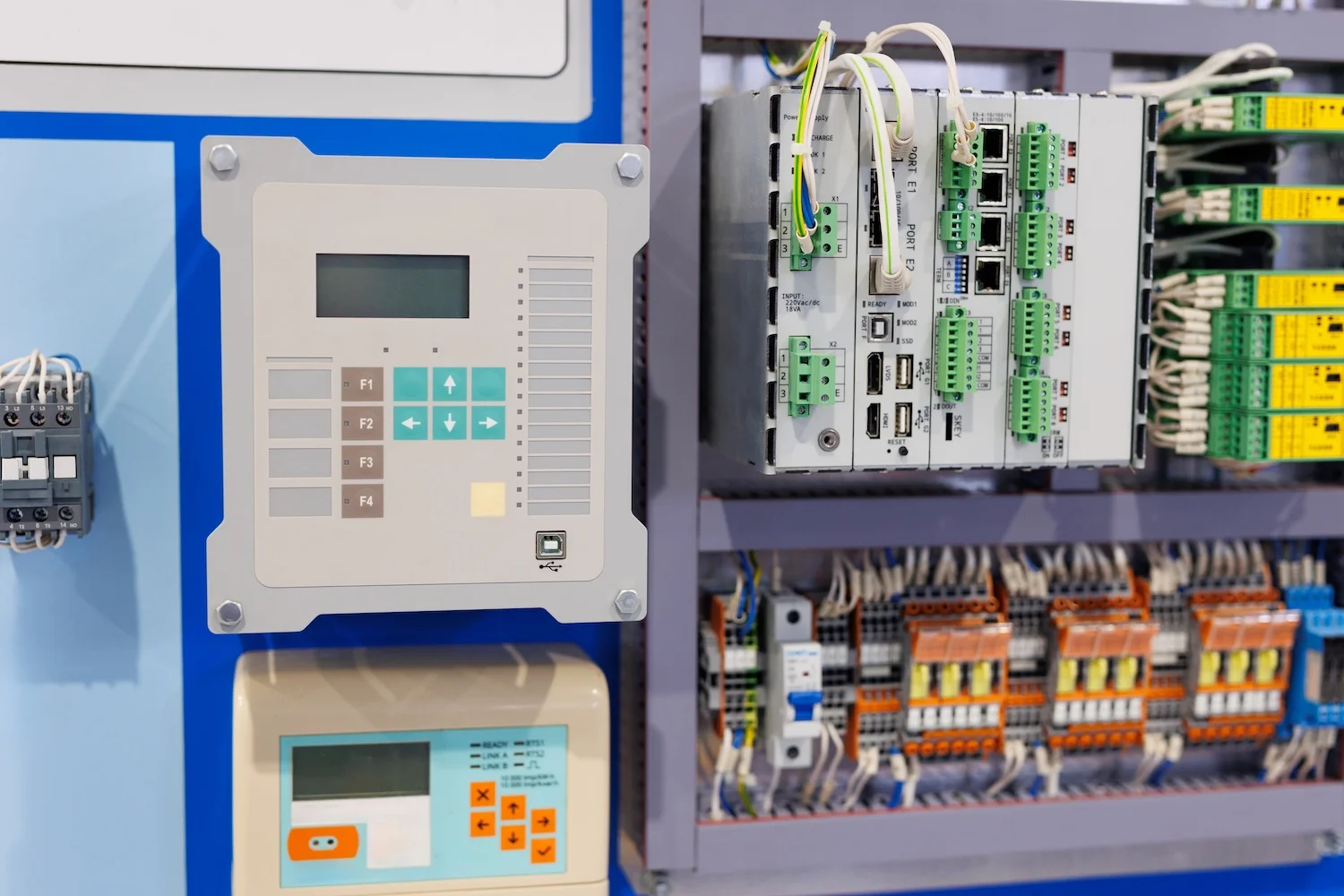
PLC (Programmable Logic Controller) systems are microprocessor control units that directly control the operation of machines and production cells. These systems, which manage motors, sensors, and valves at the field level, are one of the most fundamental building blocks of automation.
PLC systems detect all physical events occurring on the production line, make decisions, and respond quickly. This provides a great advantage in terms of the business's production continuity and quality control. Today, PLCs are positioned not only as programmable control devices but also as the most reliable "brains" of the production field.
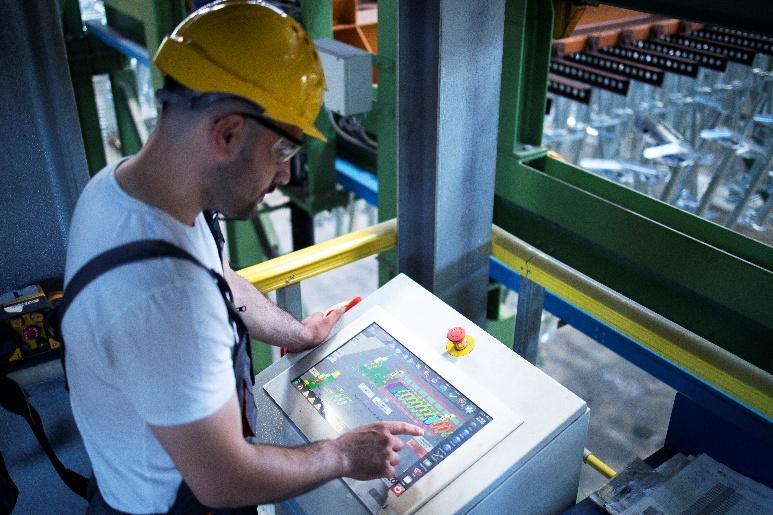
MES (Manufacturing Execution System) enables the management of numerous processes in a digital environment, ranging from production planning to quality control, and from work order tracking to performance analysis. MES systems build a strong bridge between top-level decision-makers and the production floor.
MES analyzes data received from lower-layer systems like SCADA and PLC and presents actionable insights to management. Consequently, decisions are made faster and more accurately. Thanks to MES:
The integration of these three systems (SCADA, PLC, and MES) forms the foundation for the efficient and flexible operation of modern manufacturing facilities.
Thus, an uninterrupted flow of data is ensured from the production floor to the management level, allowing the entire system to function synchronously, much like a living organism.
One of the greatest advantages of industrial automation systems is their ability to accelerate decision-making processes, enabling instant interventions. Systems like SCADA, PLC, and MES monitor and analyze thousands of data points on the production line in real-time, offering a powerful scope of control to both operators and upper management.
Example Scenario:
If sensors detect abnormal vibration values on a production line, the PLC system immediately slows down the relevant equipment. While SCADA notifies the operator via visual interfaces, MES compares this data with historical performance and can suggest automatically redirecting the workflow to another stage of the production process.
Thus, the system enables not just a reaction, but proactive planning.
Thanks to these structures, not only rapid intervention but also more strategic and long-term decisions can be made. Early error detection, prevention of quality deviations, and improvement of resource utilization become possible through this data-driven integrated control.
Industrial automation has evolved over time from merely the automatic control of machines into a structure that works integrated with decision support systems, capable of learning and adapting.
The prominent elements in this evolution are:
Thanks to these technologies, systems not only react instantaneously but also become capable of taking precautions against future events. The common denominator of all these developments is becoming even more distinct through the Industry 4.0 vision.
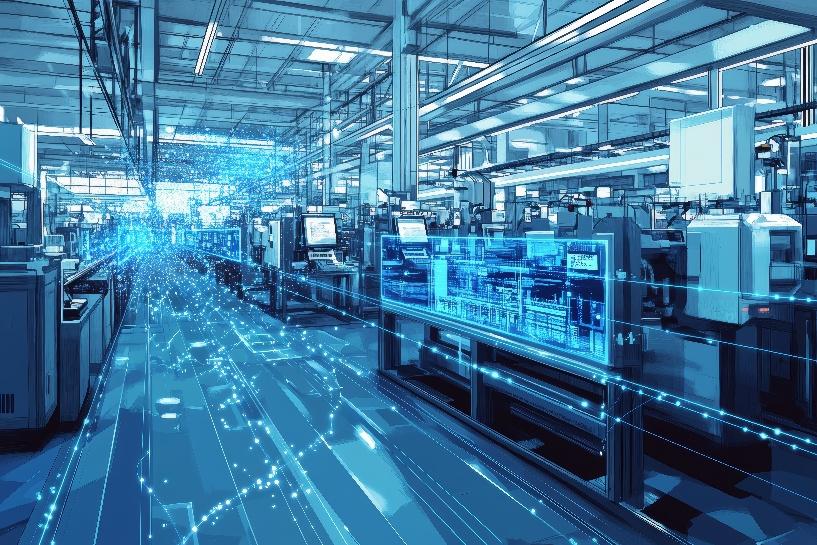
Industry 4.0 takes the digitalization of automation systems one step further, ensuring the integration of physical and digital systems. In this industrial revolution, not only machines but also production processes, the supply chain, and even customer demands have become managed by digital systems.
Production lines are no longer just systems that receive commands; they are smart systems that sense environmental data, analyze their own status, and can offer optimization suggestions.
Thanks to this:
With the impact of Industry 4.0, data has become the main raw material of the new production era. Systems like SCADA, PLC, and MES are no longer just control tools; they are the fundamental building blocks of smart factories. Thanks to these technologies, systems not only react instantaneously but also become capable of taking precautions against future events.
As Partori frequently emphasizes, energy efficiency is one of the top priority goals for today's manufacturing facilities in terms of both sustainability and cost management. Rising energy prices, environmental regulations, and corporate sustainability policies drive businesses to adopt smarter and more efficient solutions.
At this point, industrial automation systems not only manage production processes; they also prevent waste by optimizing when, where, and how energy resources are used.
The integrated operation of these systems makes energy consumption visible, preparing the ground for both instant interventions and long-term improvement strategies. Thus, businesses reduce their environmental impact and increase their competitiveness by using their resources more rationally.
Energy efficiency is no longer just a choice; it has become a strategic necessity for businesses. Automation systems are the fundamental tools that transform this necessity into a sustainable structure.

While industrial automation systems make production processes smarter through data collection, analysis, and decision-making capabilities, digital twin technology stands out as a crucial complement to this structure.
By creating a real-time digital replica of production lines or equipment, a digital twin is continuously fed with data obtained from SCADA, PLC, and MES systems.
In this way, businesses can:
This approach, which enables the simulation of production processes, provides significant advantages, especially in terms of predictive maintenance, resource management, and operational efficiency. Digital twins represent the evolution of automation into a structure that not only controls but also learns and evolves.

SCADA, PLC, and MES systems are accelerating the digital transformation in the industry as indispensable components of industrial automation. The integrated operation of these systems not only increases efficiency but also raises quality, lowers costs, and ensures continuity.
Taking a step towards digitalization is no longer an option; it is a necessity. If you want to have a say in the digital factory of the future, now is the perfect time to integrate the power of these systems into your business processes. The steps taken today will determine tomorrow's competitive advantage.
🚀 Take action now to meet SCADA, PLC, and MES systems and digitize your factory.
What is the difference between SCADA, PLC and MES?

Why is industrial automation necessary?
What is digital twin technology good for?
Who should use SCADA systems?
Is PLC programming knowledge difficult?
What is the benefits of MES systems to companies?
How does Industry 4.0 relate to automation?
Author
Yaren Direm
Marketing Intern
Yazar
Blog
Knowledge Base


.svg)
.svg)


